In 2026, the era of “generic stock photos” is officially over. We have entered the Renaissance of Creativity, where the line between imagination and digital reality has dissolved. For content creators, AI image generation is no longer a gimmick—it is a superpower. Whether you are a blogger, a social media manager, or a digital marketer, understanding how to leverage AI for visuals is the difference between standing out and being ignored.
Why AI Imagery is Non-Negotiable in 2026
If you are still scouring the internet for the perfect, royalty-free stock image, you are wasting valuable time. Today’s AI tools allow you to generate hyper-realistic, brand-specific visuals in seconds.
-
Brand Uniqueness: You can create imagery that reflects your brand’s specific color palette, mood, and aesthetic.
-
Cost-Efficiency: No more expensive photography sessions or recurring subscription fees for stock sites.
-
Visual Storytelling: AI allows you to visualize abstract concepts—like “the future of work” or “the architecture of a digital workflow”—that are nearly impossible to photograph.
The Top 3 AI Tools for Image Generation
Not all AI generators are created equal. In 2026, these are the tools leading the pack:
1. Midjourney (The Artistic Visionary)
If you need high-end, cinematic, or artistic imagery, Midjourney remains the king. Its ability to understand complex textures and lighting makes it perfect for creative projects.
2. DALL-E 3 (The Semantic Master)
Built directly into ChatGPT, DALL-E 3 is unmatched in its ability to follow instructions. If you need a specific logo, a precise layout, or text inside an image, this is the tool.
3. Stable Diffusion (The Control Specialist)
For creators who want total control over the composition—like mapping an image to a specific pose or depth map—Stable Diffusion provides the “pro-level” customization required for complex design work.
Mastering the “Prompt Engineering” for Images
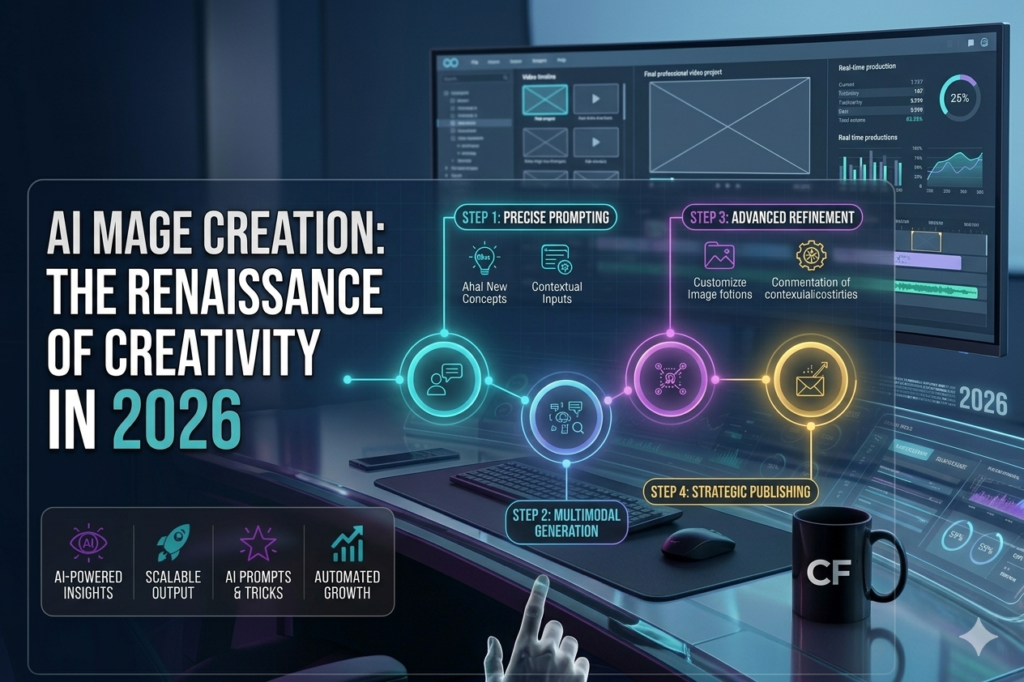
To get stunning results, you need to speak the AI’s language. Use this 4-Part Formula for every prompt you write:
-
Subject: What is the main element? (e.g., “A futuristic workspace”)
-
Style: What is the artistic medium? (e.g., “Minimalist photography, 8k resolution, cinematic lighting”)
-
Composition: Where are the elements? (e.g., “Wide angle shot, top-down view”)
-
Vibe: What is the emotional impact? (e.g., “Clean, airy, professional, and inspiring”)
Example Prompt: “A futuristic workspace in an Algerian mountain setting, warm sunset light pouring through a window, professional, minimalist, high-detail, 8k.”
Best Practices for CreatorFlow Creators
-
Maintain Consistency: When creating images for a series of blog posts, keep your style prompts consistent (e.g., always use “minimalist, soft color palette”).
-
Edit for Reality: AI sometimes struggles with hands or fine details. Use AI-native editing tools (like Generative Fill) to touch up your images before publishing.
-
Ethics and Attribution: Always be transparent about using AI in your imagery. It builds trust with your audience.
Conclusion: Visuals That Convert
The goal of AI imagery isn’t just to make your site “look pretty”—it’s to make your content memorable. A strong visual stops the scroll. It draws the reader in. In 2026, the creators who win are those who pair high-quality writing with high-impact visual storytelling.
Ready to start? Pick one of the tools mentioned above, use our prompt formula, and watch your engagement grow.
Ready to build your own production pipeline? Click here to access the Master Template.